How Can I Secure My Patio Door?
A room-by-room, step-by-step guide to locking down the most overlooked entry point in your home — without spending a fortune.
If you’ve been asking yourself “how can I secure my patio door?” — you’re already thinking smarter than most homeowners. Patio doors, whether sliding glass or French-style, are among the weakest points in most homes. The good news? Securing one doesn’t take a weekend project or a big budget. It takes the right information and a few smart upgrades.
This guide walks you through everything — from free fixes you can do right now to professional-grade solutions worth investing in. Whether you rent or own, whether your door is brand new or decades old, there’s something here that will make your home noticeably safer tonight.
Start here: understand your door type
Not all patio doors are the same, and the right security approach depends on which kind you have. The three most common types are sliding glass doors, French doors (hinged double doors), and single hinged patio doors. Each has different weak spots.
Sliding doors are vulnerable to being lifted off their tracks and to weak factory latches. French doors often have flimsy center bolts that can be kicked in. Single hinged doors share the same issues as front doors — but they’re usually in a less visible part of the house, which gives a burglar more time.
Something most people don’t realize
Sliding doors are vulnerable to being lifted off their tracks and to weak factory latches. French doors often have flimsy center bolts that can be kicked in. Single hinged doors share the same issues as front doors — but they’re usually in a less visible part of the house, which gives a burglar more time.
Step-by-step: how to secure your patio door
01
Put a bar in the track
A cut-down wooden dowel or metal bar in the bottom track of a sliding door is one of the oldest tricks — and still one of the most effective. It costs almost nothing and stops the door cold even if the lock fails.
02
Upgrade the lock
Factory latches are weak by design. Replacing yours with a keyed patio door lock or a multi-point locking bar adds real stopping power. A locksmith can swap one out in under an hour.
03
Block the lift
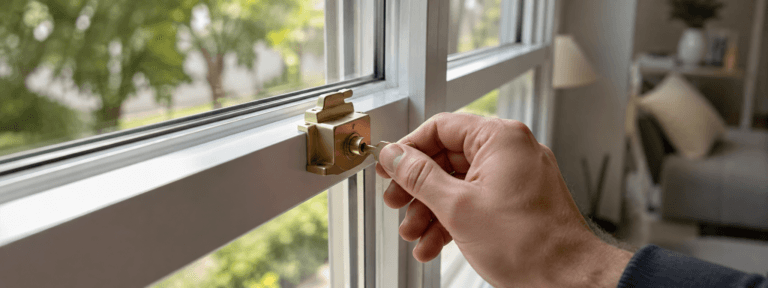
Sliding doors can be lifted right out of their track from the outside. Anti-lift pins or a secondary top bolt fix this. Check the gap between your door and the frame — if it’s more than half an inch, you’re vulnerable.
04
Add a door alarm
A simple contact alarm costs less than $20 and beeps the moment the door is opened or forced. It won’t stop a determined intruder, but it creates noise — and noise is what most burglars hate most.
05
Apply security film
Security window film won’t make your glass unbreakable, but it holds shattered pieces together. Breaking through takes extra time — and most burglars don’t stick around when a job takes longer than expected.
06
Light up the area
A motion-activated floodlight covering the patio door removes the cover of darkness entirely. Mount it high enough that it can’t be unscrewed easily. This one change alone deters a large percentage of opportunistic break-ins.
Serving Englewood and surrounding areas: If you’re not sure where to start, our Englewood Locksmith team can walk through your door setup and recommend the right combination of hardware for your specific door type and budget.
Securing a French door specifically
French doors look beautiful but come with a built-in security problem — the center gap. Most French doors use a simple surface bolt or an astragal bolt to hold the inactive door shut. These can be forced open with a strong kick aimed at the weakest point: right where the two doors meet.
The fix involves a few key upgrades. First, install heavy-duty flush bolts at the top and bottom of the inactive door — these shoot into the floor and ceiling and are much stronger than surface bolts. Second, add a multi-point locking system so that locking the door engages bolts at multiple points along the frame, not just one. Third, reinforce the door frame itself with a steel strike plate and longer screws, since most door frames splinter easily under a solid kick even when the lock holds.
“The door lock is rarely what fails during a forced entry — it’s the door frame around it. Reinforcing the frame is just as important as upgrading the lock itself.”
What about sliding glass doors?
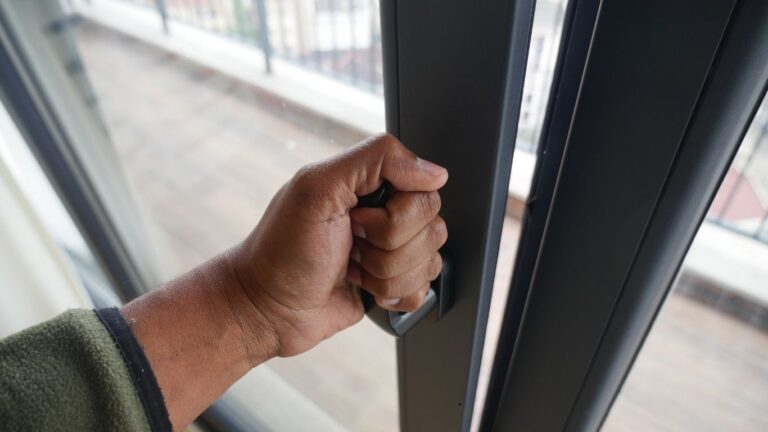
Sliding doors get broken into in two main ways — the latch is defeated, or the door is physically lifted out of the track. Addressing both vulnerabilities is what makes the difference between a door that looks secure and one that actually is.
Beyond the bar-in-the-track method, consider adding a double-bolt secondary lock higher up on the door frame. This engages the door at two separate points and is much harder to defeat than a single latch. For older sliding doors that have worn or warped tracks, a professional patio door security fix may also involve adjusting the track alignment and rollers — because a door that doesn’t sit flush in its frame is easier to force regardless of the lock.